
If You Can Automate It, You Should
Solving My Own "Data-Blindness" at Home
In a world obsessed with Large Language Models and autonomous cars, it’s ironic how most modern homes still handle rainwater like it’s the Middle Ages. You have a pit in the ground, a pump in the garage, and a whole lot of "praying for rain" in between.
Most new builds come with a standard switch-over system. It works, but it’s essentially a "black box." You have no idea how much water is left, how fast you’re using it, or if your garden irrigation is currently drinking expensive tap water while you’re not looking.
I decided it was time to stop guessing and start measuring.
The Pain: Living in a State of "Liquid Uncertainty"
Even with a modern setup, you're usually flying blind. You only realize the pit is empty when you hear the solenoid valve click or, worse, when your plants start looking like they’ve spent a week in the Sahara.
The lack of continuous data means you can't optimize. You can't correlate your water usage with the weather forecast, and you certainly can't automate your garden sprinklers with any "intelligence." It’s reactive, not proactive. And frankly, as a data consultant, not knowing the numbers was keeping me up at night.
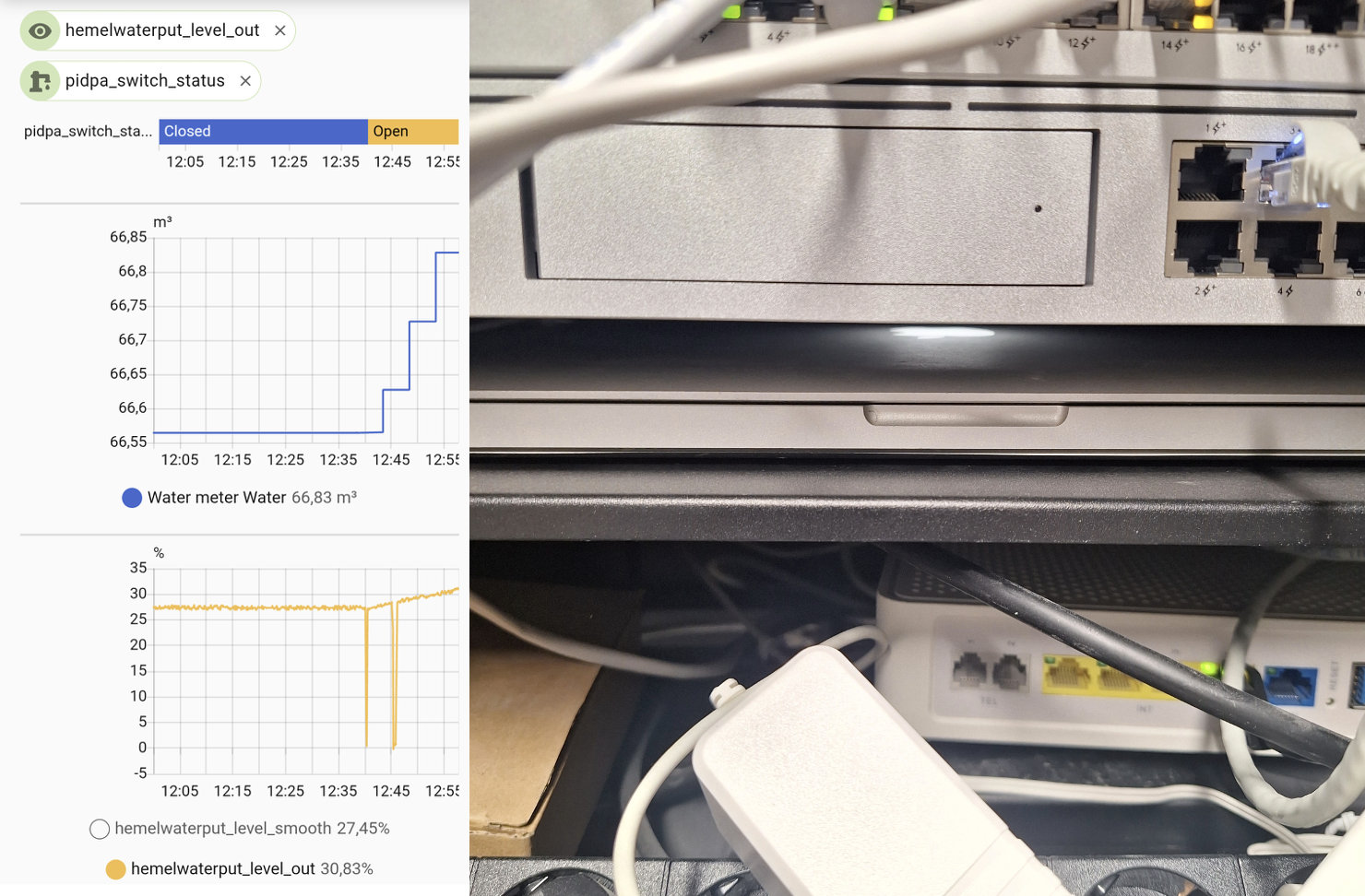
Figure: (left) Data that tells that level is increasing and drinking water valve is open. (right) Macbook as the interface between IoT gateway and Home Assistant to collect and transfer the data.
The Fix: From "Dumb Pit" to Smart Asset
To bridge the gap between the mud and the cloud, I skipped the cheap ultrasonic sensors (which usually get confused by a single spiderweb or some condensation) and went for the professional stuff: an industrial stainless steel pressure probe (4-20mA).
It measures the water column with 0.1 cm precision. No more guessing; just cold, hard (or rather, wet) facts.
I routed this data via MQTT to my central hub, a repurposed MacBook acting as the brain of the house. Now, I have a real-time stream of my water assets.
The Hardware: Because Software Needs a Solid Foundation
While I love a good line of code, software is only as good as the hardware it controls. I built a dedicated control panel using industrial DIN-rail components. It’s robust, it’s clean, and let’s be honest: it looks pretty badass.
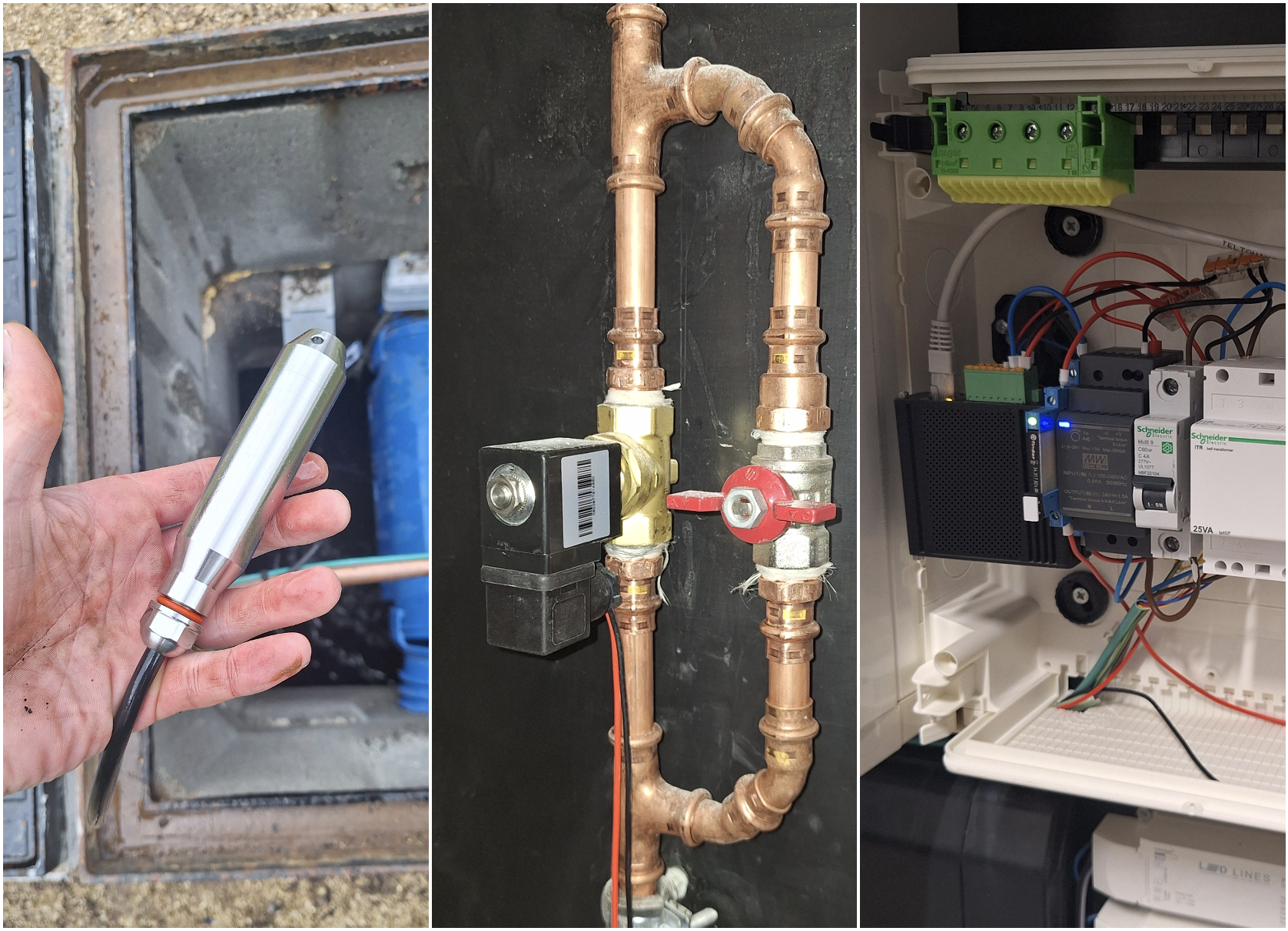
(left) Continuous level sensor (middle) Solenoid valve with bypass to control charging the reservoir. (right) DIN rail with hardware modules for measuring and controlling.
The Logic: Let the System Do the Thinking
The real magic happens when the data meets the logic. My system now handles the "balancing act" automatically:
Smart Refills: The valve only opens to top up a minimum buffer of city water when absolutely necessary.
Irrigation Guard: If the level is too low, the garden irrigation is automatically throttled. No more "accidentally" watering the lawn with the expensive stuff.
Why Should You Care?
You might think, "Bavo, that’s a very sophisticated way to flush your toilet." And you're right. But the logic here is 100% transferable to any industrial process.
Whether you’re monitoring grain silos, cooling systems, or production throughput, the journey from Physical Reality → Sensor Data → Insight → Automation is exactly what I do for my clients.
If you can't measure it, you can't improve it. And if you have to do it manually every day, you’re wasting the most expensive resource of all: your time.
Want to stop guessing and start optimizing? Whether you need the hardware to bridge the gap, the dashboards to see the truth, or the consultancy to tie it all together—I’m here to help you make your processes a bit less "manual" and a lot more "intelligent."
